





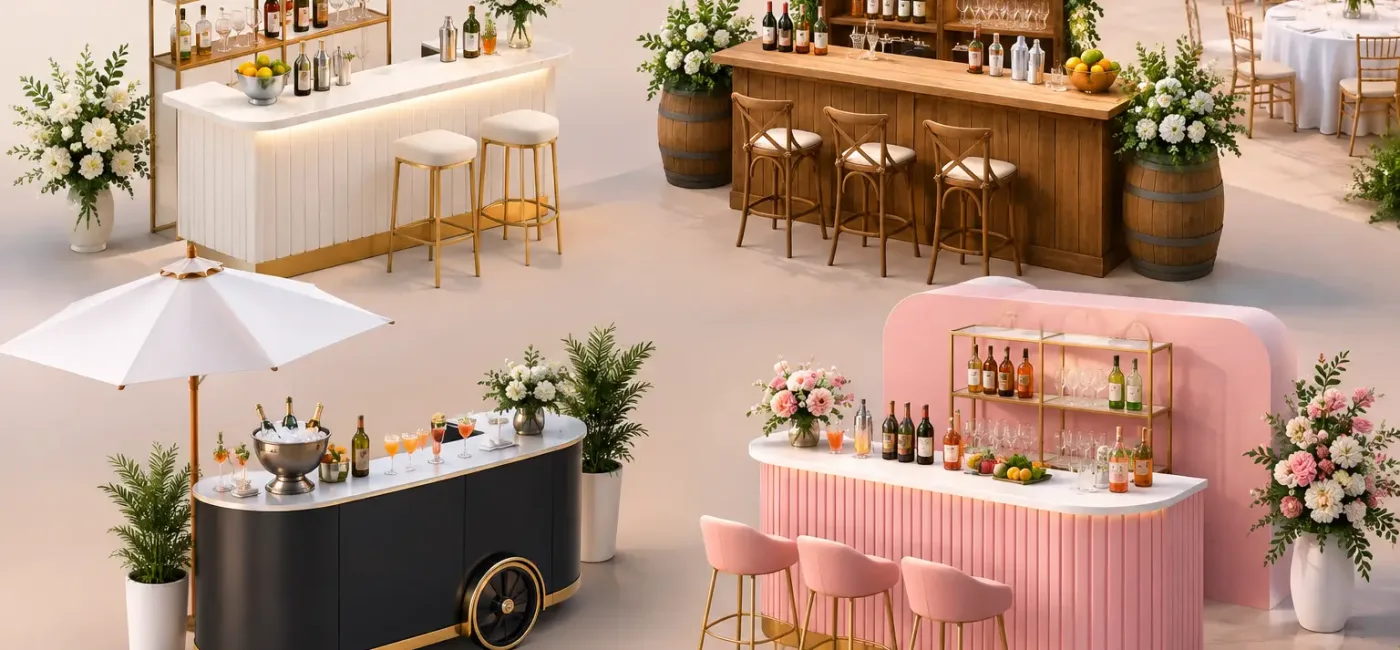
A wedding bar should feel generous without becoming the part of the budget nobody can explain afterward. The best wedding bar package examples match the size of your crowd, the length of the celebration, and what your guests actually drink. A room full of craft-beer fans needs a different plan from a formal dinner crowd that expects Champagne and good wine.
Start with the guest experience, then set the bar boundaries. You do not need every spirit, every mixer, and six cocktail stations to host well. A focused selection that stays cold, stocked, and easy to serve will usually land better than an overcomplicated menu with long queues.
How to Build a Wedding Bar Package
Most wedding bar packages are built around four decisions: hosted or cash bar, beer and wine only or full spirits, open bar duration, and premium level. Make these calls before choosing labels. They determine quantity, staffing needs, glassware, mixers, ice, and the final cost far more than whether you select one Sauvignon Blanc over another.
For a hosted bar, decide whether it runs for the entire reception or only for a defined window, such as cocktail hour through dinner. A limited hosted bar with a cash option afterward can make sense for a longer celebration. If you are offering a full open bar, keep the menu clear and set a final-pour time that works with your venue and transportation plan.
As a starting point, plan around two drinks per guest for the first hour and roughly one drink for each additional hour. That is a planning estimate, not a rule. A daytime garden wedding, a lunch reception, and a crowd with many non-drinkers may come in lower. A late-night party with a large cocktail-drinking guest list can run higher.
Wedding Bar Package Examples by Style
1. The Beer, Wine, and Bubbles Package
This is the dependable choice for a lunch reception, garden wedding, or relaxed dinner where the food is the main event. Offer two beers, one cider or hard seltzer, a red wine, a white wine, sparkling wine, and quality non-alcoholic options. It is familiar, easy for guests to navigate, and simpler to manage than a full cocktail bar.
Choose wines that are versatile with food rather than overly niche. A crisp white, a fruit-forward red, and a dry sparkling wine cover most preferences. For beer, pair a light lager with a more flavorful option such as a pale ale or stout, depending on the menu and climate.
This package works especially well when you want to put more of the budget toward catering, flowers, music, or a Champagne toast. The trade-off is that guests who prefer spirits may feel limited, so it helps to communicate the bar offering clearly on the menu or reception signage.
2. The Classic Open Bar Package
A classic open bar adds a practical range of spirits to beer, wine, and bubbles. Think vodka, gin, rum, tequila, bourbon or blended whisky, plus standard mixers, soda, juices, tonic, and garnish. Rather than trying to stock every bottle category, select recognizable labels guests know and trust.
This format is a strong fit for an evening wedding with a mixed-age guest list. It gives guests freedom to order a gin and tonic, whisky highball, rum and cola, or simple vodka soda without turning the bar into a craft-cocktail operation. Service stays faster, and the shopping list stays controlled.
Keep the cocktail menu to simple builds. A bar that can serve familiar drinks quickly is more valuable than one struggling to make twelve complicated recipes during speeches and dinner service. Include plenty of water, soft drinks, and non-alcoholic wine or beer so every guest has a real choice.
3. The Signature Cocktail Package
A signature cocktail package adds personality without requiring a full premium bar. Choose one or two drinks that reflect the couple, the season, or the menu, then support them with beer, wine, bubbles, and non-alcoholic alternatives. For example, a citrus gin spritz and an espresso-style cocktail can cover very different tastes.
The key is to choose drinks that can be batched or built quickly. A cocktail with five ingredients, a smoked garnish, and a delicate presentation may look great in a tasting, but it can slow down service for 150 guests. Highballs, spritzes, Margaritas, and simple whisky or rum cocktails are usually more practical.
Use this package when you want a memorable menu moment but still need cost discipline. Buy the spirits and ingredients around the cocktails in volume, then avoid stocking a wide selection of rarely requested bottles. If one signature drink is tequila-based, for instance, add a tequila option for simple mixed drinks rather than opening several unrelated spirit categories.
4. The Premium Celebration Package
For a formal evening reception, a premium package puts the focus on established Champagne, better-known single malts or premium blended whiskies, top-shelf tequila, and elevated wine choices. It is less about excess and more about making the key pours feel intentional.
A premium bar is most effective when it is curated. Feature Champagne for the toast, a quality red and white wine for dinner, two or three premium spirits, and a limited cocktail list. This gives guests a clear upgrade while preventing the budget from being diluted across too many expensive labels.
Consider reserving collectible or prestige bottles for a private toast, family table, or after-dinner whisky service. Opening rare bottles at a busy open bar rarely delivers the value you expect. A small, well-presented premium moment often feels more special than putting every luxury bottle into general circulation.
The Hosted Bar With Smart Limits
An open bar does not have to mean an unlimited everything bar. Many couples choose a hosted package with a defined menu: beer, wine, two cocktails, and selected spirits. Others host drinks through dinner, then switch to a paid bar for the dance portion of the night.
You can also use drink tickets for a casual reception or destination event. Two tickets per adult guest gives everyone a welcome drink and a second choice while keeping the total predictable. It is not the right fit for every crowd, especially a formal black-tie wedding, but it can work well for a daytime celebration or restaurant-style reception.
Avoid making guests guess what is included. A simple bar sign prevents awkward conversations and helps bartenders keep service moving. If premium pours are available for purchase, label them separately from hosted selections.
Quantities That Keep the Bar Moving
Ordering too little creates a bigger problem than ordering a modest buffer, particularly when replacement stock is not nearby. Your final quantity depends on reception length, venue rules, food, weather, and guest preferences, but the following mix is a useful starting point for a typical mixed crowd:
- About 40 percent wine and sparkling wine
- About 30 percent beer, cider, or hard seltzer
- About 20 percent spirits and cocktails
- About 10 percent non-alcoholic drinks, with extra water available throughout
Adjust the mix based on your people. A wine-focused dinner may need more bottles and fewer beer cases. A warm outdoor event may call for more chilled beer, spritz ingredients, sparkling water, and ice. If your guests love whisky, offer it as a thoughtful after-dinner option rather than assuming it should dominate the full bar order.
Do not forget the operational supplies. Ice, cups or glassware, cocktail napkins, openers, garnishes, mixers, coolers, and secure storage matter just as much as the bottle count. Confirm what the venue and bartender provide before you order. A great spirits selection cannot solve a bar that runs out of ice halfway through cocktail hour.
Choose Bottles Guests Recognize
For weddings, recognizable brands usually beat obscure experimentation. Guests make decisions quickly at a crowded bar, and familiar beer, Champagne, wine, whisky, tequila, and vodka names reduce hesitation. That does not mean every bottle must be expensive. It means each category should have a dependable option that feels appropriate for the occasion.
Jarbarlar can help couples and planners source event quantities across wine, beer, spirits, Champagne, and non-alcoholic choices in one order, which is especially useful when the bar package includes several categories. Quantity pricing and bundle options can also make a curated package more manageable than buying individual bottles from multiple places.
A final practical point: plan for responsible service. Offer substantial food, visible water stations, non-alcoholic drinks that feel festive, and a clear way for guests to get home safely. The wedding bar is there to lift the celebration, not to become the story everyone remembers for the wrong reason.