





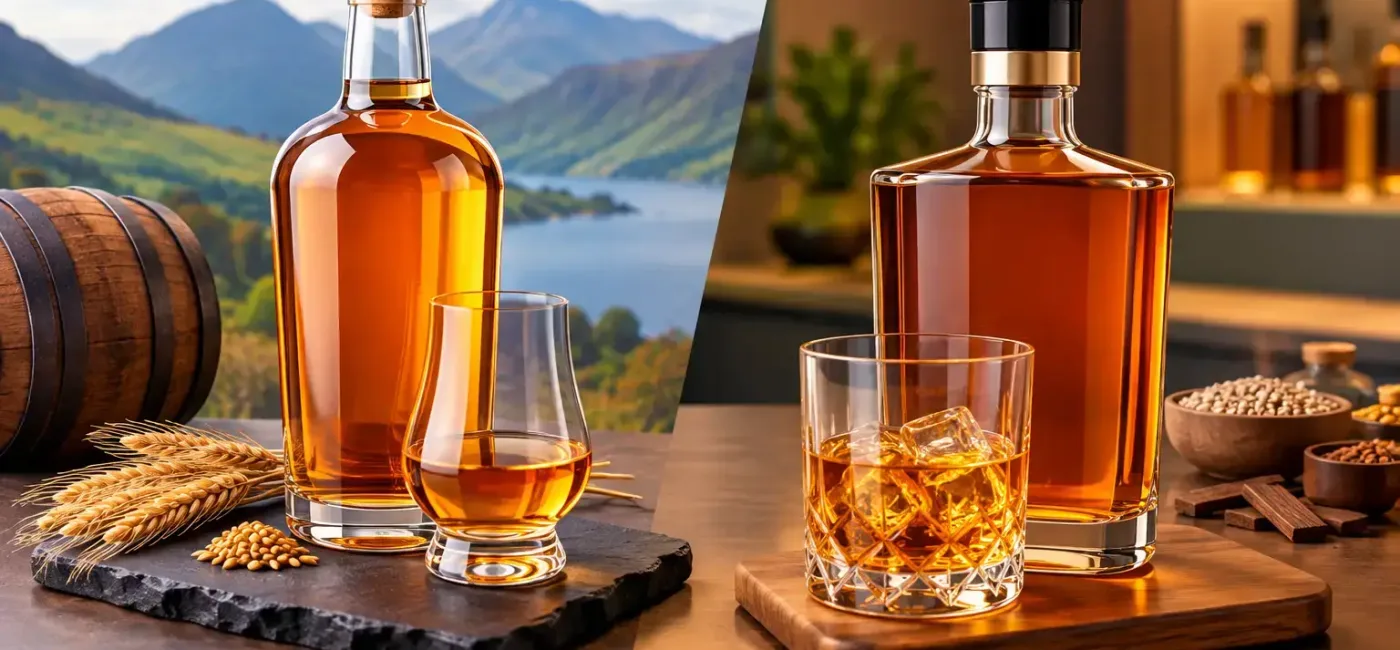
A bottle labeled single malt can look like the obvious premium choice, while a blended whisky may seem like the practical party bottle. But single malt versus blended whisky is not a simple quality ranking. They are made differently, designed for different drinking experiences, and priced for different occasions. The better choice depends on who is drinking, how you plan to serve it, and what you want from each glass.
Single Malt Versus Blended Whisky: The Core Difference
Single malt whisky is made entirely from malted barley at one distillery. The word “single” refers to one distillery, not one barrel or one batch. A single malt can still combine whisky from many casks, ages, and barrel types to create a consistent house style.
Scotch single malts are the best-known example, with names such as The Macallan, Glenfiddich, Glenlivet, Talisker, and Lagavulin representing notably different styles. A Speyside single malt may be soft and fruity, while an Islay bottling can be smoky, coastal, and intensely peated. Japanese and American producers also make single malts, but the term is most closely associated with Scotland.
Blended whisky combines two or more whiskies. In the case of blended Scotch, that usually means malt whisky mixed with grain whisky, often from multiple distilleries. Grain whisky is commonly made with grains such as wheat or corn alongside malted barley, and distilled in a continuous still. It tends to be lighter and softer than malt whisky, which gives the blender flexibility to build an approachable, balanced final bottle.
That does not make blended whisky lesser whisky. A great blend is deliberate: the blender is balancing aroma, body, sweetness, spice, smoke, and finish across many component whiskies. Johnnie Walker, Chivas Regal, Monkey Shoulder, and Dewar’s are familiar examples of brands built around that skill.
Do Not Confuse Blended Whisky With Blended Malt
A blended malt is a separate category. It contains only malt whiskies, but those malt whiskies come from more than one distillery. It can offer some of the richness associated with single malt while showing a broader, more rounded profile. The label matters, especially when you are buying a gift or comparing prices across similar-looking bottles.
Flavor: Character Versus Consistency
Single malt is often chosen for distinctiveness. Because its spirit comes from one distillery, the bottle tends to carry a more recognizable regional and house character. You may find orchard fruit, sherry richness, honey, toasted oak, vanilla, sea salt, pepper, or peat smoke, depending on the producer and maturation.
That individuality can be exciting, but it also means a single malt may be polarizing. A heavily peated Scotch can be unforgettable for a smoke-lover and completely wrong for someone who prefers lighter, sweeter drinks. Age statements and cask finishes add further variation. A 12-year-old sherry-cask single malt and a 12-year-old bourbon-cask single malt can taste very different.
Blended whisky usually aims for balance first. The malt component contributes depth and flavor, while the grain component can soften edges and keep the texture smooth. Many blends are easy to enjoy neat, over ice, with soda, or in a highball. They are also generally reliable from bottle to bottle, which matters when you are buying for a crowd or restocking a home bar.
Neither style is automatically smoother. A well-made single malt can be silky and gentle, while a bold blend can be spicy, smoky, and full-bodied. Read the brand and style, not just the category.
Why Blends Often Cost Less
Price is one of the clearest practical differences between the two categories. Single malt production is typically more limited, and its identity is tied to one distillery’s stocks. Long maturation, premium cask selection, limited releases, and demand for established names can push prices upward.
Blenders have access to a wider pool of whiskies and can make use of grain whisky, which is generally more efficient to produce. That flexibility often allows strong value at everyday price points. For a casual weeknight pour, a whisky highball, or a party where guests have different preferences, a blend can make more financial sense without feeling like a compromise.
Premium blends can still command serious prices. Older age statements, rare components, special editions, and prestige packaging can put some blended whiskies well above entry-level single malts. Likewise, not every single malt is expensive. There are excellent approachable 10- and 12-year bottles for drinkers who want to start exploring the category.
When to Buy a Single Malt
Buy single malt when the bottle itself is part of the occasion. It works especially well for a whisky fan who enjoys comparing distilleries, a thoughtful birthday or corporate gift, or a quiet pour after dinner. It is also the stronger pick when you want a bottle with a clear story: a particular region, age statement, cask finish, or limited-edition release.
For someone new to whisky, start with the flavor profile rather than chasing the most famous name. A light, fruit-forward Speyside-style malt is often easier to approach than a heavily peated expression. If the recipient already likes rich dried-fruit flavors, look toward sherry-cask maturation. If they enjoy smoky barbecue, espresso, or strong coffee, a peated malt may land well.
Single malt is best appreciated neat, with a few drops of water, or over one large cube. That is not a rule. If you enjoy it in a cocktail, serve it that way. Still, buying an expensive, nuanced bottle solely to mix with heavily flavored ingredients may not offer the best value.
When a Blended Whisky Is the Better Buy
A blended whisky is the smart choice when versatility matters. It is easy to serve at gatherings because it suits neat pours, ice, soda, ginger ale, and classic whisky cocktails. A good blend is also an uncomplicated bottle for guests who do not usually drink whisky but are open to trying one.
For hosting, think about volume and service style. If you are preparing highballs for a dinner party, corporate event, or holiday gathering, choose a blend with a profile that stays pleasant when chilled and diluted. You will get more value from a dependable bottle than from opening several premium single malts that guests may not notice in a mixed drink.
Blends also make sense for first-time buyers. They provide a useful baseline for understanding what you like – caramel sweetness, soft fruit, gentle spice, oak, or smoke – before you spend more on a distillery-specific bottle.
How to Choose the Right Bottle Quickly
Start with the occasion. A recognizable single malt has gift appeal and feels special on a shelf. A quality blend is often the more useful purchase for entertaining, cocktails, or a shared bottle that needs to please different palates.
Then consider the drinker. Choose a lighter, fruitier style for someone who enjoys easy-drinking spirits. Choose richer sherry influence for fans of dark chocolate, raisins, and warm baking spice. Choose peat only for someone who already enjoys smoke-forward flavors.
Finally, set a realistic budget. Spending more does not guarantee a better experience. A $50 blend that gets opened and enjoyed with friends is a better buy than a collectible bottle that sits untouched because no one wants to break the seal.
The Best Choice Is the One You Will Pour
Single malt offers distillery character, depth, and a stronger sense of occasion. Blended whisky delivers balance, flexibility, and excellent value for everyday drinking or larger gatherings. Keep one of each if you can: a blend for easy sharing and highballs, and a single malt for slower pours when the bottle deserves your full attention.
The next time you are choosing between them, skip the status question. Ask what is being served, who is drinking, and whether the bottle is meant to be savored, mixed, gifted, or passed around the table. That answer will point you to the right whisky.