





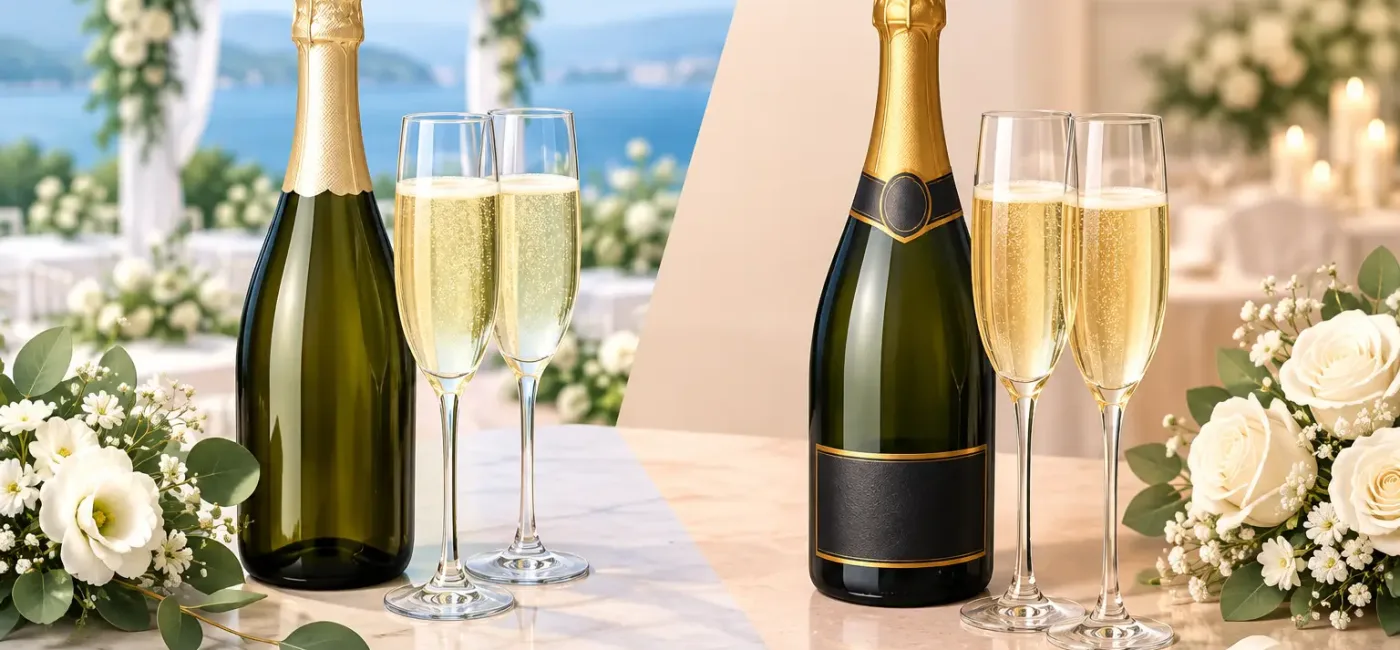
The first cork usually pops before the ceremony is even over. That is why prosecco versus champagne for weddings is not just a question of labels or luxury. It affects your drinks budget, the mood of the reception, and whether every guest gets a proper pour when it is time to toast.
Champagne brings ceremony and prestige. Prosecco brings easy-drinking freshness and keeps the numbers comfortable when your guest list grows. Either can work beautifully. The right call depends on when you are serving it, who is drinking it, and how much of the celebration you want sparkling wine to cover.
Prosecco Versus Champagne for Weddings: The Real Difference
Champagne can only come from the Champagne region of France and is generally made with a traditional bottle-fermentation method. The wine develops more complex notes – think citrus, apple, brioche, toast, almond, and cream – along with a fine, persistent mousse. It is the bottle many guests recognize as a milestone choice, especially for a formal toast, a black-tie dinner, or a wedding where the couple wants a classic luxury detail.
Prosecco comes primarily from northeastern Italy and is usually made using the tank method. Its profile is brighter and more fruit-forward, with pear, green apple, peach, lemon, and floral notes. The bubbles are often softer, and the wine is immediately approachable. It feels festive without asking guests to analyze every sip.
Neither style is automatically better. Champagne is usually more layered and more expensive because of its region, production method, and aging. Prosecco is often the practical high-value choice for a large crowd, a daytime wedding, or a reception with plenty of other drinks on offer.
The flavor question matters more than the label
Choose Champagne when you want a dry, structured wine that can stand beside canapes, seafood, fried appetizers, rich cheeses, or a plated meal. Its acidity and depth make it more than a toast drink.
Choose Prosecco when you want something light, fruity, and easy to enjoy during a welcome reception, garden ceremony, brunch wedding, or relaxed cocktail hour. It also works especially well in sparkling cocktails, where the freshness is more useful than Champagne’s subtle complexity.
Pay attention to sweetness terms rather than assuming all sparkling wines taste the same. Brut is the dependable dry choice for most weddings. Extra Dry sounds drier but is actually a little sweeter, which can suit Prosecco drinkers and fruit-forward menus. Demi-Sec is noticeably sweeter and is best reserved for dessert pairings or guests who prefer a softer style.
Set the Budget Before Choosing the Bottle
The fastest way to make a good wedding drinks decision is to separate the toast from the rest of the celebration. You do not have to serve the same sparkling wine all day.
A popular approach is Prosecco for the welcome drink or cocktail hour, then Champagne for the head-table toast, wedding-party photos, or a smaller VIP pour. It gives the event a premium moment without making every bottle a premium purchase. The reverse can work too: Champagne at the start for a short, formal reception, followed by still wine, beer, and spirits once dinner begins.
If sparkling wine will be your primary reception drink, Prosecco usually gives you more room in the budget for variety. That can mean a better red and white wine selection, more beer choices, quality non-alcoholic options, or enough stock to avoid running dry late in the night.
Do not buy based only on the lowest bottle price. Consider service, ice, glassware, storage, and the fact that opened sparkling wine loses its best character quickly. A well-chilled, well-poured mid-range bottle makes a stronger impression than a prestige label served warm after sitting near the dance floor.
Estimate bottles with real pour sizes
A standard 750 ml bottle contains about 25 ounces. For a wedding toast, plan on six 4-ounce pours per bottle. For a fuller 5-ounce reception pour, plan on five glasses per bottle.
For example, 120 guests receiving a toast need about 20 bottles at six pours per bottle. Build in a small buffer for generous pours, broken glasses, late arrivals, and anyone who would like a refill. Ordering 22 to 24 bottles is safer than trying to make the calculation exact.
If you are serving sparkling wine for a one-hour cocktail reception, count on one to two glasses per guest depending on the season, menu, and what else is available. A summer outdoor wedding with light food may move faster than an evening banquet where guests are also choosing wine, beer, cocktails, and non-alcoholic drinks.
Magnums are worth considering for a smaller toast or head table. One 1.5-liter magnum equals two standard bottles, looks excellent in photos, and reduces the number of bottles your team has to open. For a large wedding, however, standard bottles are often easier for staff to chill, carry, and pour efficiently.
Match the Sparkling Wine to the Wedding Format
A formal ballroom reception gives Champagne a natural advantage. The label signals occasion, and the wine’s dry, refined style fits a polished dinner service. If the wedding includes caviar, oysters, lobster, truffle dishes, or a French-inspired menu, Champagne is an especially strong fit.
For a rooftop party, beach celebration, garden wedding, or daytime brunch, Prosecco can feel exactly right. It is lively, uncomplicated, and refreshing in warm weather. A Prosecco bar with peach puree, orange juice, berries, or citrus garnishes can also create a high-energy welcome moment without requiring a full cocktail program.
Guest preferences should guide the decision too. If your crowd includes serious wine drinkers or older relatives who see Champagne as part of the tradition, save room for it. If your guests are mostly there to dance, mingle, and enjoy a bright first drink, a good Brut Prosecco is likely to disappear quickly.
There is also a middle ground. Other traditional-method sparkling wines can offer fine bubbles and more complexity at a lower cost than Champagne. They are useful when you want a dry, elegant style for the full room but prefer to reserve Champagne pricing for a few special bottles.
Serving Details That Protect the Experience
Sparkling wine should be chilled well before service. Aim for roughly 45 to 50 degrees Fahrenheit for Champagne and 40 to 45 degrees for Prosecco. Warm bottles foam aggressively, waste wine, and make pouring slow when guests are waiting.
Keep unopened bottles cold in ice and water rather than ice alone. Water surrounds more of the bottle and chills it faster. Do not freeze sparkling wine, and avoid leaving cases in direct sun, a warm car, or beside catering equipment.
For glassware, a flute preserves bubbles and keeps service neat. A tulip-shaped sparkling wine glass offers more room for aroma and is a better choice for guests who will notice the difference in Champagne. Wide vintage coupes look great in photos but lose carbonation faster, so they are best for a short toast or a styled display rather than a long reception.
Open bottles close to the time of service. Hold the cork, turn the bottle slowly, and let out a quiet sigh instead of a dramatic pop. It is safer, saves wine, and looks more controlled. Assign this task to trained bar staff or a trusted coordinator rather than leaving a busy wedding party to manage dozens of bottles.
A Smart Split for Many Wedding Budgets
For many couples, the best answer is not picking one side of prosecco versus champagne for weddings. It is using each bottle where it earns its place.
Serve chilled Prosecco at arrival, where its bright fruit and friendly price make sense. Keep a small Champagne selection for the couple, parents, wedding party, or a formal toast. Add beer, still wine, spirits, and non-alcoholic sparkling drinks so guests have real choices. This approach feels generous, controls spend, and avoids buying prestige bottles for people who would rather have a lager or a mocktail.
The best wedding bottle is the one served cold, poured on time, and shared without anyone worrying that the bar will run out. Choose the sparkle that lets you celebrate freely, then make the first glass count.