




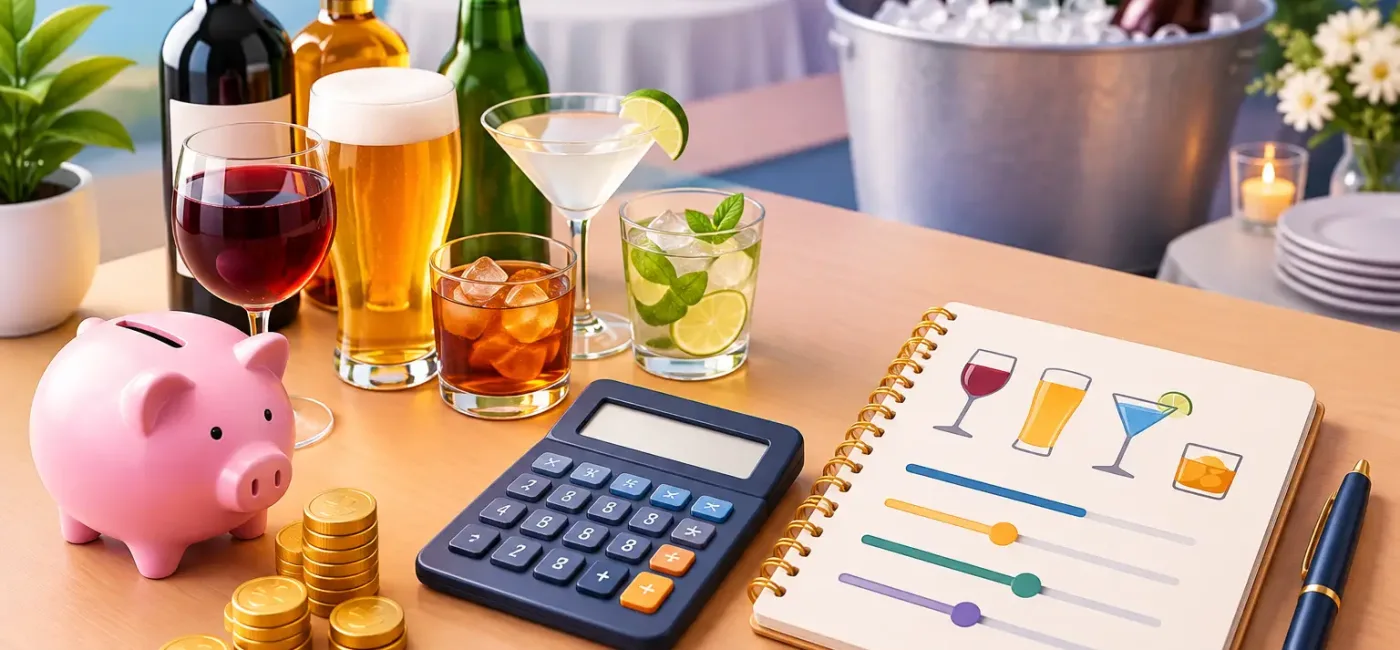
A 60-person party can run short on drinks faster than you expect – especially when the first round starts before the food arrives. But ordering double what you need is not a smarter plan. The best way to how to calculate event drinks is to start with actual guest behavior, then adjust for the event length, food, and the drinks you plan to serve.
For most celebrations, a clear drinks plan means better value, less waste, and no one leaving early to find more ice, beer, or wine. You do not need a bar-sized inventory. You need the right mix in the right quantities.
How to Calculate Event Drinks by Guest Count
Start with the number of adults expected to drink, not the full guest list. If you are hosting 80 people and know that 15 will not drink alcohol, calculate from 65 drinkers. For a work event, the number may be lower. For a birthday, wedding, or holiday party, it may be higher.
A reliable starting point is two drinks per guest for the first hour, then one drink per guest for each additional hour. For a four-hour event, that works out to five drinks per drinking guest.
The formula looks like this:
Drinking guests x estimated drinks per guest = total servings needed
For example, 50 drinking guests at a four-hour evening event:
50 x 5 servings = 250 total servings
That figure is your planning base, not your final order. It assumes a standard social event with a mix of beer, wine, cocktails, and nonalcoholic options. A daytime lunch with a substantial meal may land closer to three drinks per guest. A late-night party with music, dancing, and no formal sit-down meal can easily push beyond five.
Do not count on every guest drinking the same amount. Instead, use the average to build an order that can handle the room without loading up on bottles that will stay unopened.
Adjust the Number for Your Event Type
The schedule changes the drinks calculation more than most hosts realize. A two-hour networking event calls for a different order than a five-hour wedding reception.
For a short lunch, afternoon gathering, or corporate reception, plan around two to three drinks per drinking guest. Guests are usually more moderate, and food or conversation sets the pace. For a three- to four-hour dinner party, engagement celebration, or housewarming, four to five drinks per drinking guest is a practical range.
Longer evening events need more flexibility. Plan five to six drinks per guest for a reception that moves into dancing or a party with an open bar. If guests will bring friends, arrive in waves, or stay later than planned, add a 10 percent buffer.
The guest mix matters too. A wine-focused dinner for colleagues may use far more wine than beer. A casual game-day gathering may go heavily toward beer, canned drinks, and simple highballs. If your group includes dedicated whisky or tequila drinkers, offer one or two recognizable spirits rather than buying a broad lineup of bottles that each get only a few pours.
Convert Servings Into Bottles, Cans, and Cases
Once you have a total number of servings, convert it into formats you can order. These are useful working estimates for standard pours:
- A 750 ml bottle of wine provides about five 5-ounce glasses.
- A 750 ml bottle of spirits provides about 16 standard 1.5-ounce pours.
- A 12-ounce beer, cider, or ready-to-drink can is one serving.
- A standard Champagne bottle provides about six 4-ounce flutes.
- A 1.5-liter magnum of wine provides about 10 glasses.
If your 50-person, four-hour event needs 250 servings, do not buy 250 servings of one category. Divide the total based on what your guests are likely to choose.
For a balanced crowd, a simple split is 40 percent beer and canned drinks, 35 percent wine and sparkling wine, and 25 percent spirits or cocktails. That means 100 beer or canned servings, about 88 wine servings, and about 62 spirit servings.
In purchasing terms, you would need roughly 100 cans or bottles of beer and cider, 18 bottles of wine, and four 750 ml spirit bottles. Round up where it makes sense, particularly on beer, sparkling wine, and a versatile base spirit such as vodka or gin. Those are easy to serve and usually easy to keep for a later gathering if unopened.
Plan the Drink Mix Before You Shop
A bigger selection does not automatically create a better event. It can lead to half-finished bottles, expensive leftover stock, and a bar setup that is harder to manage. Build around a focused range that matches the occasion.
For a casual party, beer, cider, one red wine, one white wine, a sparkling option, and two spirits is usually enough. Add mixers, ice, and a nonalcoholic option, then you have a complete bar without unnecessary complexity.
For a dinner, let the menu guide the order. White wine and sparkling wine tend to move faster with seafood, lighter dishes, and warm-weather menus. Red wine usually earns a bigger share with steak, barbecue, lamb, or richer pasta. If Champagne is for a toast only, calculate one flute per guest rather than treating it as an all-night pour.
For cocktails, keep the menu intentionally narrow. Two signature drinks are easier to stock, batch, and serve than a full cocktail menu. If you are serving gin and tonics plus margaritas, calculate the spirit separately based on expected demand, then make sure the tonic, soda, citrus, and ice match the number of planned pours.
Do Not Forget Mixers, Ice, and Water
Alcohol is only one part of the order. A well-stocked drinks table can still fail if the ice runs out halfway through the event.
For spirits, plan enough mixer for most, but not all, pours. Some guests will drink spirits neat, on the rocks, or with a different mixer. As a practical rule, buy one 1-liter bottle of mixer for every 10 to 12 mixed drinks. Include soda water, tonic water, cola, ginger beer, and citrus mixers based on the drinks you are actually serving.
Ice demand depends on temperature, venue, and serving style. For a standard event, plan one to two pounds of ice per guest. Use the higher end for outdoor parties, warm weather, self-serve coolers, or cocktail-heavy events. Keep extra ice separate for chilling beer, wine, and canned drinks so it does not disappear into glasses too early.
Water and nonalcoholic choices are not optional extras. Have still water, sparkling water, soft drinks, and at least one adult-friendly alcohol-free option available from the start. This gives designated drivers, light drinkers, and guests pacing themselves a real choice, while helping the whole event run more responsibly.
When to Buy Extra Drinks
A buffer is worth it when the cost of running out is higher than the cost of a few unopened bottles. Add 10 to 15 percent when your event has an uncertain headcount, a late finish, warm outdoor conditions, or a guest list known for enjoying drinks.
Buy extra selectively. A few more beer cases, canned cocktails, and versatile wine bottles are safer than adding extra premium spirits across every category. Expensive bottles can be a great centerpiece or gift, but they should not be your fallback inventory unless you know your guests want them.
Also check your serving size. Generous free-pours can turn 16 servings from a spirit bottle into 10 or 12. Use jiggers, marked pourers, or a bartender who understands the plan if you need the numbers to hold. At a self-serve bar, pre-batched cocktails and cans make portions easier to control.
A Quick Event Drinks Example
Say you are planning a four-hour birthday party for 40 guests. You expect 34 to drink alcohol. Using five drinks per drinking guest gives you 170 servings. Add a 10 percent buffer, and plan for about 187 servings.
If your group prefers beer and wine, you might allocate 80 servings to beer and cider, 75 to wine, 12 to sparkling wine for a toast, and 20 to spirits for simple mixed drinks. That works out to 80 cans or bottles, 15 bottles of wine, two bottles of sparkling wine, and two 750 ml spirit bottles. Add mixers, ice, water, and nonalcoholic drinks, then round up beer or canned drinks if your venue is warm or the event may run late.
The goal is not to make every bottle disappear. It is to make every guest feel looked after while keeping your order easy to manage. Count the drinkers, choose a realistic pace, buy to your menu, and keep a small buffer in the categories people reach for first.