




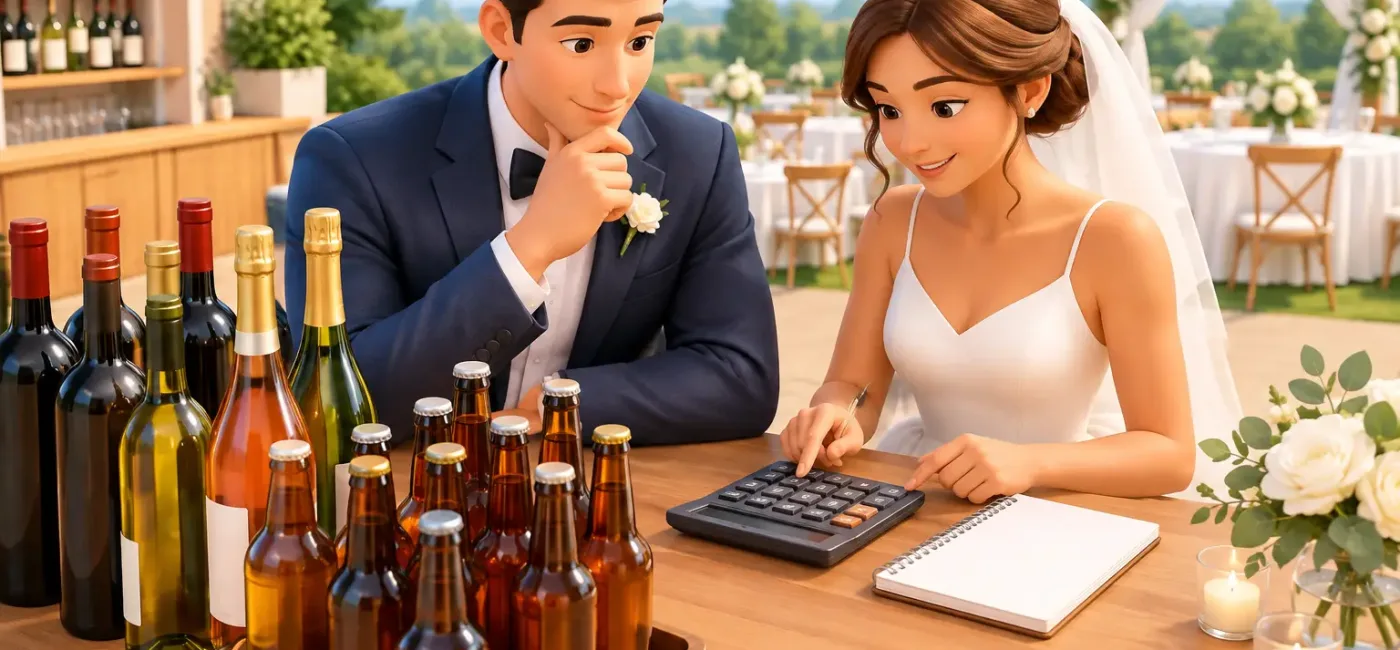
The how many bottles wedding question can make a well-organized reception suddenly feel complicated. Order too little and the bar runs dry before the speeches end. Order too much and you have paid for cases that will sit untouched. The practical answer comes down to four numbers: your guest count, event length, drinking mix, and whether the bar is fully hosted.
For most weddings, plan for two drinks per guest for the first hour, then one drink per guest for every additional hour. From there, convert the estimated drinks into bottles, cans, and mixers based on what you are actually serving. It is simple math, with a few smart adjustments for your crowd.
How Many Bottles for a Wedding Reception?
Start with the number of adult guests who are likely to drink. Do not automatically count every invited guest the same way. Children, non-drinkers, and guests who are driving may lower your alcohol needs, while a party-focused crowd can raise them.
A five-hour reception for 100 adult guests usually calls for roughly 500 to 600 total alcoholic drinks. That range assumes a hosted bar and includes the cocktail hour, dinner, and dancing. A lunchtime wedding, a shorter program, or a cash bar will usually land closer to the lower end. An evening celebration with a late finish, a strong cocktail culture, or a generous open bar should use the higher end.
A useful planning formula is:
Total drinks = drinking guests × 2 for the first hour + drinking guests × 1 for each additional hour
For 100 drinking guests over five hours, that is 100 × 6 drinks, or 600 drinks. If you expect 80 of the 100 guests to drink alcohol, plan around 480 drinks instead.
This number is your starting point, not a reason to buy 600 bottles. Different bottle formats serve very different numbers of guests.
Bottle Conversion Cheat Sheet
A standard 750 ml wine bottle provides about five glasses when poured at five ounces. Use four glasses per bottle if you want more generous pours or expect guests to top up often.
A 750 ml bottle of spirits makes around 16 standard 1.5-ounce pours. In real event service, plan on 14 to 15 drinks per bottle to account for generous bartenders, spillage, and cocktails that use a little more than the recipe suggests.
One Champagne or sparkling wine bottle usually serves six flutes for a toast. If sparkling wine is being poured all evening rather than only for speeches, treat it like regular wine and expect about five servings per bottle.
Beer and cider are easiest to count by the can or bottle. One guest drink equals one 12-ounce can or bottle. Larger formats should be converted by ounces, especially if you are buying 16-ounce cans or sharing bottles.
Build the Right Mix for Your Guests
A good wedding bar does not need every possible drink. It needs enough choice for guests to feel looked after, without creating a slow, expensive service setup. For many receptions, a balanced split looks like 40% wine, 30% beer and cider, 20% spirits and cocktails, and 10% sparkling wine.
For 500 total drinks, that works out to 200 wine servings, 150 beer or cider servings, 100 spirit-based drinks, and 50 sparkling wine servings. You would need about 40 bottles of wine, 150 beers or ciders, seven bottles of spirits, and nine bottles of Champagne or sparkling wine.
That mix should change when the guest list tells you otherwise. A wine-focused dinner with older relatives and a plated meal may need 50% or more wine. A casual outdoor wedding may move more beer, cider, and canned cocktails. A crowd that loves cocktails may be happier with a focused menu of two signature drinks than a full bar with ten spirit options.
For Singapore-style wedding planning, climate matters too. At warm outdoor or daytime celebrations, chilled beer, crisp white wine, sparkling wine, and refreshing highballs can move faster than heavy reds or neat pours. Always have cold non-alcoholic options in the same quantity mindset. Water, soft drinks, and zero-proof choices keep guests comfortable and help the bar run better.
Wine: Split Red, White, and Sparkling With Purpose
If wine is your main reception drink, start with a 55/45 white-to-red split. White wine tends to move quickly before dinner and in warm venues, while red often gains ground once food is served. For an indoor evening wedding with a meat-heavy menu, a 50/50 split can work well.
For example, if you are buying 48 bottles of still wine, order about 26 bottles of white and 22 bottles of red. Add sparkling separately for the toast or reception service.
Champagne is a memorable choice for speeches, but every guest does not need a full glass. If 120 people are attending and you expect 100 to toast, 17 bottles gives you six pours each, with a small buffer. Buy more if Champagne is also being offered at cocktail hour.
Do not forget table wine service. If bottles will be placed on tables rather than poured at a bar, consumption can rise because guests see and share what is available. In that format, add roughly 10% more wine than your first calculation.
Spirits: Keep the Bar Focused
A well-stocked wedding bar can be efficient without carrying every label. Choose recognizable spirits that cover the most common orders: vodka, gin, whisky, tequila, and rum. Then make sure the mixers match the menu – tonic, soda water, cola, ginger beer, juices, and citrus are often more important than adding a sixth spirit category.
For a 100-guest reception with 100 expected spirit drinks, seven 750 ml bottles is a reasonable base. If you are serving signature cocktails, calculate the exact recipe instead. A cocktail using two ounces of spirit will yield only around 11 to 12 serves per bottle, not 15.
Signature cocktails give you a better handle on cost and inventory. A whisky highball, gin and tonic, spritz, or tequila soda is fast to build and uses fewer ingredients than a complicated cocktail list. Keep one option light and refreshing, and consider a zero-proof version so non-drinkers are not limited to soda.
Add a Buffer, But Do Not Panic Buy
Adding 10% to 15% is the sensible wedding buffer. It protects you against a hot day, a delayed dinner, an unexpectedly thirsty table, or a few bottles that are opened early. For 500 planned drinks, that means ordering for 550 to 575 drinks.
Go closer to 15% when the bar is free, the event runs past five hours, or guests have a strong interest in beer, wine, or cocktails. Stay around 10% for a short reception, a daytime event, or a guest list with many non-drinkers.
There is no need to over-order every category. Build the buffer into flexible choices. Extra beer, cider, sparkling water, and versatile wine are easier to use after the wedding than highly specific cocktail ingredients. Unopened wine and spirits also store well when kept properly, while chilled beer needs more immediate space and planning.
A Sample Order for 100 Guests
For a five-hour wedding with 80 drinking guests, use 480 drinks as your base and add a 10% buffer for a target of about 530 drinks. A balanced order could include 44 bottles of still wine, 12 bottles of sparkling wine, 160 cans or bottles of beer and cider, and eight bottles of spirits with enough mixers for 120 cocktails.
That order does not mean every guest will have the same six drinks. Some will drink only wine with dinner, some will start with beer and switch to cocktails, and some will stick to non-alcoholic drinks. The point is that the overall bar has enough volume and enough choice to handle those different habits.
If your wedding includes a champagne tower, a cocktail hour, or a late-night after-party, calculate those moments separately rather than hoping they fit inside the main reception total. A champagne tower can use several bottles quickly, and a one-hour after-party can add one or two drinks per guest.
Make Purchasing Easier
Before placing the order, confirm the venue rules on outside alcohol, corkage, bartenders, ice, glassware, and final delivery timing. Alcohol is only one part of bar service. A great bottle list can still cause problems if there is not enough ice, no chilled storage, or too few people pouring drinks.
Buying in quantity also makes it easier to keep your selection consistent across the whole reception. Jarbarlar can help wedding planners source wine, Champagne, beer, spirits, and non-alcoholic options in one order, with quantity pricing and delivery built around the event schedule.
Your final number should feel calm, not excessive: enough bottles for a generous celebration, enough variety for real guests, and a small reserve for the moments that turn a wedding from planned to unforgettable.