





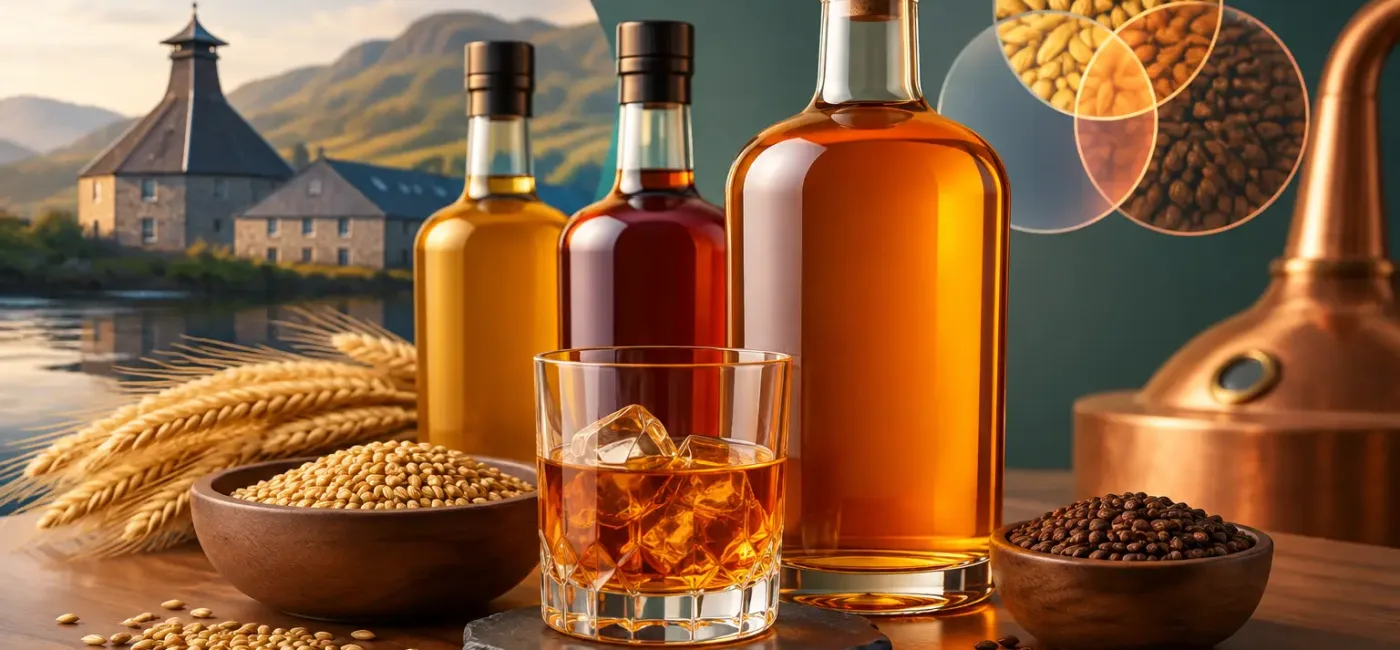
A bottle labeled blended malt whisky can be one of the smartest buys on the whisky shelf – especially when you want real malt character without limiting yourself to one distillery’s house style. It is often rich, approachable, and versatile enough for a quiet pour after dinner, a thoughtful gift, or a whisky table at a gathering.
The name causes confusion because “blended” sounds broad, while “malt” sounds specific. Both words matter. A blended malt is made by combining single malt whiskies from two or more distilleries. There is no grain whisky in the blend. That distinction puts it in a different category from the familiar blended Scotch whisky bottles many drinkers know.
What Is Blended Malt Whisky?
To understand this category, start with the individual parts. Single malt whisky is produced at one distillery using malted barley. A blended malt whisky combines single malts from several distilleries, usually selected to achieve a consistent flavor profile or a particular balance of fruit, spice, smoke, and oak.
The whiskies are still malt whiskies. The blender is simply working with a larger palette of distillery styles. One malt may bring orchard-fruit notes, another may add honeyed depth, and a lightly peated component may give the final whisky a dry, smoky edge.
A blended Scotch whisky, by comparison, contains both malt whisky and grain whisky. Grain whisky is not automatically lesser quality, but it generally has a lighter style and plays a different role in the final bottle. If you prefer the fuller cereal character and weight associated with single malt, a blended malt is worth seeking out.
You may also come across the older term “vatted malt.” It was once commonly used for this style, but “blended malt” is the modern category name found on current labels.
Why Blended Malt Whisky Tastes Different
A single malt is a snapshot of one distillery’s production choices: its water source, still shape, fermentation approach, cask policy, and local character. That identity can be compelling, but it can also be narrow. A blended malt lets the producer build a broader, more rounded whisky.
That does not mean every blended malt tastes the same. Some are soft and sweet, built around vanilla, caramel, baked apple, and gentle spice. Others lead with coastal salt, roasted nuts, dried fruit, or peat smoke. The quality depends on the component whiskies, the casks used, the age of the liquid, and how carefully those elements have been brought together.
This is where the category can offer excellent value. Buying a single malt means buying into one distillery name, often with a premium attached. Buying a blended malt can give you access to well-chosen malt whisky from multiple sources at a price that remains practical for regular drinking or a larger occasion.
There is a trade-off. If you specifically want the recognizable profile of a particular distillery, choose that distillery’s single malt. If you want balance, variety, and a whisky made for easy enjoyment, blended malt can be the better bottle.
How to Read a Blended Malt Whisky Label
The label tells you more than the category name. A few details can quickly help you decide whether a bottle suits your taste and budget.
- Age statement: If a bottle says 12 years, every whisky in it has been aged for at least 12 years. Age can add oak influence and depth, but an age statement alone does not guarantee that you will prefer the taste.
- Region or style cues: Terms such as Speyside, Highland, island, or peated can point toward the overall direction, though a blend may contain malt from more than one Scotch region.
- Cask information: Sherry, bourbon, wine, rum, and other casks each leave a different mark. Sherry casks often suggest dried fruit and spice, while bourbon casks commonly bring vanilla, honey, and coconut.
- ABV: Standard-strength bottlings are often smooth and accessible. Higher-proof releases can be more concentrated and rewarding with a few drops of water, but they may feel less casual for new drinkers.
Do not assume that a named distillery must appear on the front label. Many blended malt producers intentionally keep the component distilleries undisclosed. That can be frustrating for collectors who want provenance, but it also allows the blender flexibility when maintaining a house style from batch to batch.
Choosing a Bottle for the Occasion
For a first blended malt, start with an unpeated or lightly peated expression. These are usually the easiest to share because they sit comfortably between sweet, malty, fruity, and oaky flavors. They work well neat, on a large ice cube, or with a small splash of water.
For someone who already enjoys smoky Scotch, look for a peated blended malt. The smoke may be medicinal, coastal, earthy, grilled, or sweet depending on the malts used. A smoky blend can be a useful middle ground for a group: expressive enough for peat fans, but often less intense than a heavily peated single malt.
For gifting, packaging and brand recognition matter, but they should not be the only factors. An age statement, a limited release, or an attractive gift box can make the bottle feel more special. For a host gift or office celebration, an approachable bottle with broad appeal is usually a safer choice than a high-proof, heavily smoky release.
When buying for a party, think about serve size before chasing prestige. A standard 750 ml bottle provides roughly 16 pours at 1.5 ounces each, or fewer if guests prefer generous measures. For a larger gathering, choosing two complementary bottles – one soft and fruity, one smoky or sherried – gives guests a simple choice without turning the bar into a tasting seminar.
Best Ways to Serve Blended Malt Whisky
There is no single correct serve. The right choice depends on the whisky, the weather, and whether you are tasting or socializing.
Neat is the clearest way to understand the bottle. Use a tulip-shaped glass if you have one, take a small sip first, and let the whisky sit on your palate before deciding whether it needs water. A few drops can open richer aromas, particularly in a higher-ABV blend.
Over one large cube, blended malt becomes softer and more refreshing. This is a good option for casual entertaining in warm weather. Avoid filling the glass with small ice cubes if you want to preserve the flavor for more than a few minutes.
A highball is another strong choice. Pour whisky over ice in a tall glass and top with chilled soda water. A lemon peel works well with light, citrusy malts, while a grapefruit peel can complement a smoky style. Keep the mixer simple. A quality blended malt already has enough character to carry the drink.
Blended malt can also work in classic whisky cocktails, though it is best to reserve older or limited bottles for sipping. For mixing, choose a balanced, reasonably priced expression with enough body to remain noticeable alongside bitters, citrus, or vermouth.
Is Blended Malt a Good Value Buy?
Often, yes – but not automatically. The best value is the bottle you will actually open and enjoy, not the one with the most impressive number on the box. Compare age, ABV, cask treatment, and style alongside price. A younger blended malt with a confident, balanced profile may be more satisfying for regular pours than an older bottle that is overly oaked or too delicate for your taste.
It also pays to buy for the way you drink. A premium blended malt makes sense for a gift, a celebration, or a slow tasting session. For a house whisky, look for consistency, good balance, and a price that makes a second bottle easy to justify. Retailers such as Jarbarlar make this simpler when you can compare bottle sizes, promotions, and multi-bottle pricing in one place.
The next time you see blended malt whisky on a shelf, do not treat it as a compromise between categories. Treat it as a deliberate style: multiple malt distilleries, one finished character, and plenty of room to find a bottle that fits both your palate and the occasion.