





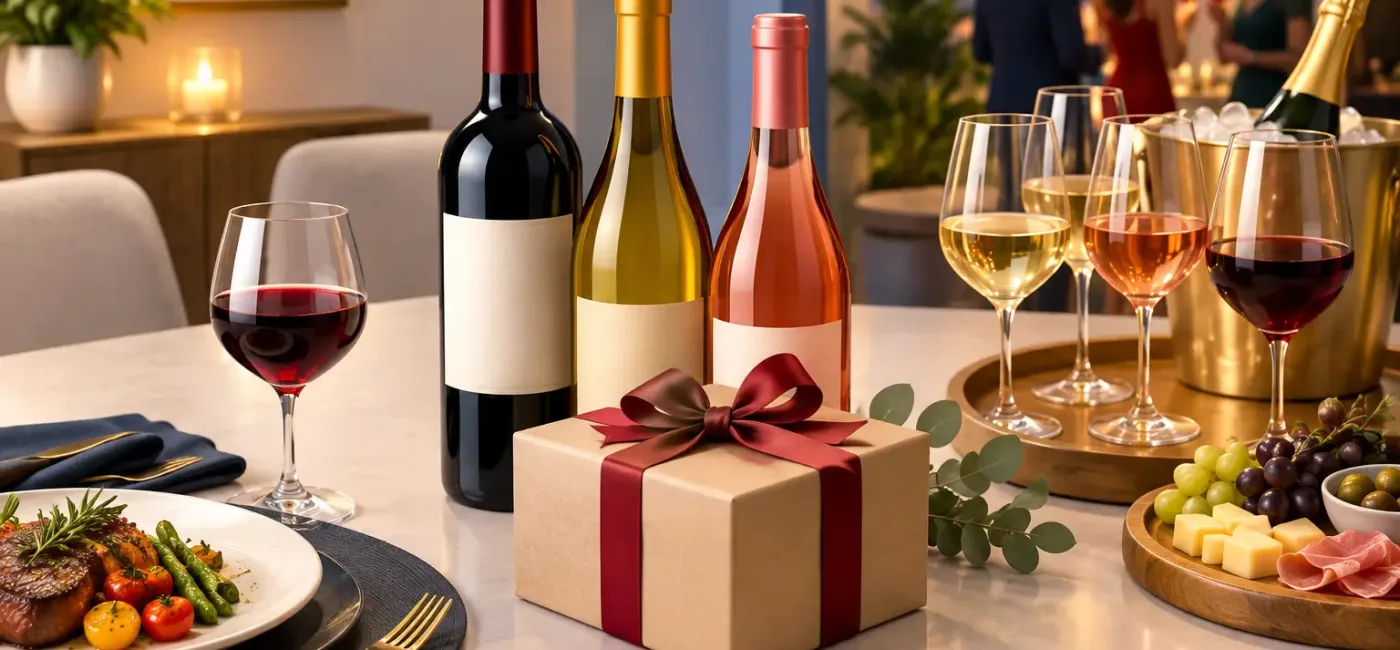
A wine aisle can make a simple dinner plan feel unnecessarily complicated. Knowing how to choose wine comes down to a few practical calls: who is drinking it, what is being served, how much you want to spend, and whether the bottle is for tonight or worth saving. You do not need to memorize every region or grape to make a good choice.
Start With the Occasion
Choose the occasion before you choose the country or label. A casual weeknight bottle should be easy to open, easy to enjoy, and priced so you do not feel precious about pouring a second glass. A birthday dinner, housewarming gift, or client gathering may call for a more recognizable producer, a classic region, or a sparkling bottle that looks the part.
For a party, versatility matters more than chasing a highly specific style. Dry sparkling wine, a fresh Sauvignon Blanc, Pinot Grigio, Rosé, or a smooth red such as Merlot tend to work across a mixed crowd. They are approachable, familiar, and forgiving with snacks, shared plates, and different taste preferences.
For a gift, start with the recipient rather than the price tag. Someone who usually drinks bold reds may appreciate a Cabernet Sauvignon, Malbec, or Syrah. A Champagne or premium sparkling wine is a reliable choice for a major celebration, while a wine gift set can make the presentation feel more complete. If you do not know their taste, choose a respected, recognizable label in a classic style instead of an obscure bottle with an unusual profile.
How to Choose Wine by Taste
The fastest way to narrow the shelf is to decide whether you want something light and crisp, rich and full-bodied, fruity and soft, or dry and structured. Wine terms can sound technical, but they describe sensations you can use.
White wine is often the simplest starting point. Sauvignon Blanc is typically fresh, zesty, and citrus-forward. Pinot Grigio is light and clean, making it an easy choice for warm weather or lighter meals. Chardonnay varies more widely: unoaked versions can be bright and mineral, while oaked Chardonnay can taste fuller, creamier, and rounder.
With red wine, Pinot Noir is usually lighter-bodied, smooth, and flexible with food. Merlot is soft, fruit-forward, and a comfortable option for guests who find some reds too tannic. Cabernet Sauvignon is bolder and more structured, often a better match for steak, lamb, or rich sauces. Malbec brings ripe dark-fruit character and works well at barbecues, while Syrah or Shiraz can offer peppery, fuller-bodied flavor for drinkers who want more intensity.
Rosé sits comfortably between many categories. Dry rosé is refreshing, food-friendly, and useful when one bottle has to satisfy guests ordering everything from salad to grilled meat. Sparkling wine brings acidity and bubbles, which make it particularly good with fried food, salty snacks, and celebratory moments.
If a guest says they prefer “sweet,” do not assume every fruity wine will suit them. Fruit flavor and sweetness are different. A dry wine can taste of peach, berries, or tropical fruit without containing much residual sugar. Look specifically for Moscato, late-harvest wines, off-dry Riesling, or demi-sec sparkling wine when actual sweetness is the goal.
Match the Wine to the Food, Not a Rulebook
Classic pairings are useful because they solve real flavor problems. Acidic wines refresh the palate around rich or creamy dishes. Tannic reds can stand up to protein and fat. Sweetness helps tame spicy heat. Still, the sauce, seasoning, and cooking method often matter more than the main ingredient.
A grilled steak with pepper sauce is better with Cabernet Sauvignon or Malbec than with a delicate Pinot Noir. But a roast chicken with mushrooms can work beautifully with Pinot Noir, Chardonnay, or even a dry rosé. Salmon can pair with a crisp white, but a lightly chilled Pinot Noir makes sense when it is served with a richer glaze or grilled over charcoal.
For spicy Asian food, avoid overly tannic, high-alcohol reds. They can make chili heat feel hotter. Reach for aromatic whites such as Riesling, Gewürztraminer, or Sauvignon Blanc, preferably with a touch of sweetness if the dish is seriously spicy. For sushi, shellfish, and steamed fish, choose crisp whites or sparkling wine. For burgers, ribs, and grilled meats, medium- to full-bodied reds are the practical move.
Cheese boards are another place where one rigid rule falls short. Fresh goat cheese likes crisp whites. Creamy cheeses can work with sparkling wine or Chardonnay. Aged cheddar and hard cheeses handle fuller reds. Blue cheese is famously good with sweet wine. If you are serving several cheeses, sparkling wine is one of the safest all-round choices.
Use Price as a Filter, Not a Shortcut
A higher price can reflect a famous region, limited production, aging, presentation, or collector demand. It does not automatically mean the wine will suit your meal or taste better to you. The best-value bottle is the one that fits the moment and gets enjoyed.
For everyday drinking, look for dependable grape varieties and producers you recognize in your preferred style. Once you find a bottle you like, note the grape, region, alcohol level, and vintage. This gives you a repeatable buying reference that is more useful than trying to remember a long tasting note.
For dinner parties and gifting, spending a little more can improve the experience through better presentation, broader flavor complexity, and confidence in the label. It depends on the audience. A casual group may get more value from two crowd-friendly bottles than one premium red that only a few guests appreciate.
When buying for a larger gathering, calculate more than the bottle count. A standard 750 ml bottle provides about five small glasses. For a dinner where wine is the main drink, plan closer to half a bottle per guest, then adjust for duration, other beverage options, and whether guests are driving. Buying several bottles of the same versatile wine keeps service simple, while adding one red and one white gives people a choice.
Read the Label for Useful Clues
Wine labels provide more help than they first appear to. The grape variety tells you the broad style in many New World wines. A region may be the bigger clue in traditional European wines, where the grape is not always front and center. You do not need to decode every appellation to shop well, but a few basics help.
The vintage is the year the grapes were harvested. It can matter more for fine wines and wines intended for aging than for everyday bottles. For fresh, aromatic whites and rosés, a recent vintage is often a good sign. For structured reds, a few years of bottle age may bring softer tannins and more developed flavor.
Alcohol percentage offers another quick indicator. A wine around 11% to 12.5% alcohol often feels lighter and fresher, though there are exceptions. Wines around 14% or higher may feel riper, warmer, and fuller-bodied. Neither is inherently better, but the number can help you avoid a heavy red for a light lunch or a very delicate white for a rich roast.
Terms such as reserve, old vines, and estate bottled can be meaningful, but they are not universal guarantees of quality. Use them as supporting information, not the only reason to buy. The producer, grape, region, and style you enjoy are better anchors.
Serve It at the Right Temperature
Serving temperature can make an average bottle taste better and a good bottle taste flat if you get it wrong. Most people serve white wine too cold and red wine too warm. Very cold whites lose aroma and flavor; warm reds can taste overly alcoholic.
Chill sparkling wine well. Serve crisp whites and rosé cold but not frozen, then let them sit for a few minutes after opening. Fuller whites need slightly less chilling. Light reds such as Pinot Noir can benefit from 15 to 20 minutes in the refrigerator, while Cabernet Sauvignon and other fuller reds are best slightly below a warm room temperature.
Open red wine before guests arrive, especially if it is young and bold. Fifteen to 30 minutes of air can soften the edges. There is no need to decant every bottle, but it can help with concentrated reds or older wines that may have sediment.
Build Your Own Reliable Wine Shortlist
The smartest way to buy wine is not to hunt for one mythical perfect bottle. Build a small rotation for the occasions you actually host and enjoy: a crisp white, a richer white, a light red, a bold red, a dry rosé, and a sparkling wine. From there, try different regions and producers within each style.
Keep the decision practical. Pick a bottle that suits the food, the guests, and the budget, then serve it properly. The wine that disappears happily over dinner is usually the right one.