





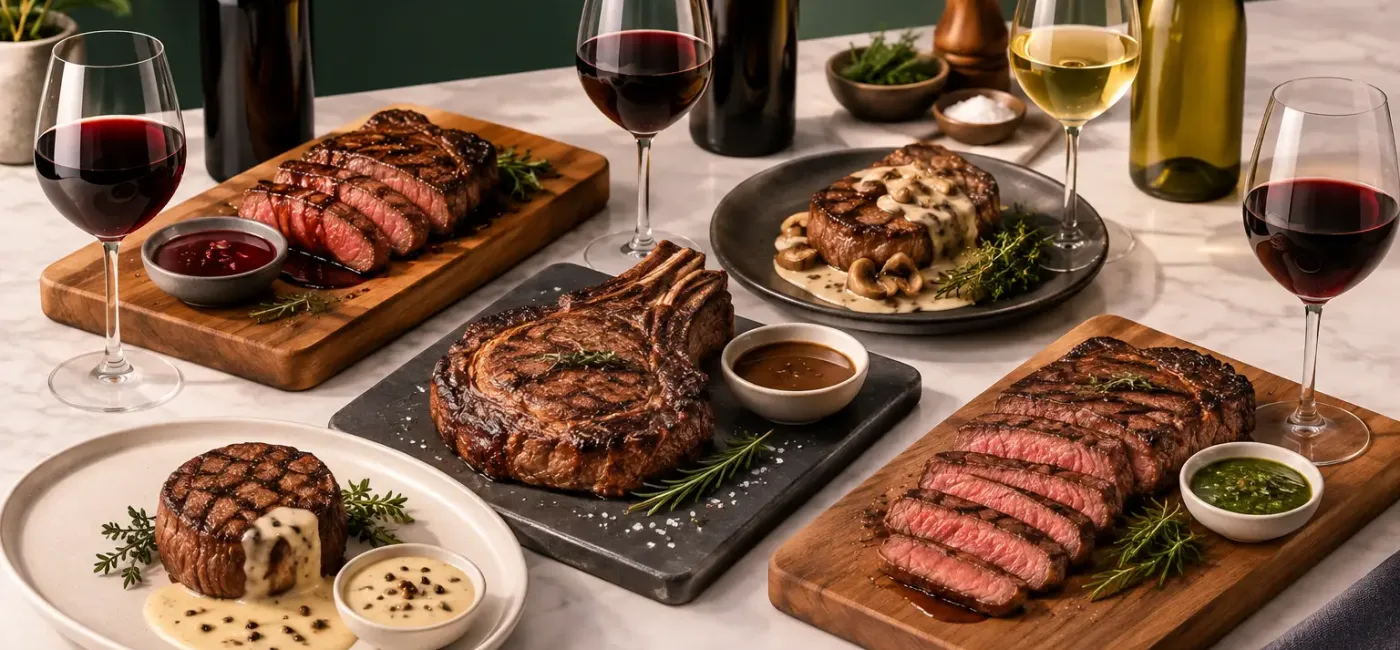
A great steak wine pairing starts before the bottle is opened. The cut on the board, the amount of marbling, the char from the grill, and even a spoonful of pepper sauce can change what tastes best in the glass. A big red is often the right call, but it is not the only call. Match the wine to the richness and seasoning of the steak, and dinner feels more intentional without becoming complicated.
Start With the Cut, Not the Wine Label
Steak has fat, protein, salt, smoke, and often a deeply browned crust. Tannic red wines work well because their drying grip is softened by fat and protein, making the wine feel smoother while keeping each bite from becoming too rich. That is why Cabernet Sauvignon and ribeye are a classic combination.
But not every steak needs the same level of power. A lean filet mignon can make an aggressively tannic wine feel hard and dry. A heavily marbled ribeye can overwhelm a delicate Pinot Noir. The useful question is simple: how rich, smoky, and strongly flavored is the steak in front of you?
Cooking temperature matters too. A rare steak is softer, juicier, and less charred than one cooked medium-well. As the crust gets darker and the meat becomes firmer, you can usually move toward a fuller-bodied wine with more structure.
Steak Wine Pairing by Popular Cut
Ribeye: Cabernet Sauvignon, Syrah, or Malbec
Ribeye is the easy choice for bold reds. Its generous marbling calls for a wine with enough tannin, acidity, and fruit to cut through the fat. Cabernet Sauvignon is the traditional option, especially a bottle with blackcurrant, cedar, and savory notes. The tannin cleans up the palate between bites, while the wine’s depth stands up to a hard sear or charcoal grill.
Syrah is excellent when the ribeye has a smoky crust or is seasoned with black pepper, garlic, and herbs. Its dark fruit, peppery edge, and occasional smoked-meat character meet the steak where it is. Malbec is the crowd-friendly alternative: plush, dark-fruited, and usually softer than Cabernet, with enough body for a rich cut without demanding a long decant.
New York Strip: Cabernet Sauvignon or Merlot Blend
New York strip has a firmer texture and less marbling than ribeye, but it still brings enough beefy flavor for structured red wine. Cabernet Sauvignon remains a strong match, particularly for a simply seasoned strip steak with salt, pepper, and butter.
If you prefer a rounder, less tannic style, look for a Merlot-led Bordeaux-style blend. It keeps the dark-fruit character and savory structure of a serious red while feeling more supple across the palate. This is a smart choice for a dinner table where some guests enjoy red wine but do not want something too dry or intense.
Filet Mignon: Pinot Noir, Merlot, or Cabernet Franc
Filet mignon is tender, lean, and comparatively mild. Pairing it with the biggest, most oak-heavy Cabernet can drown out what makes the cut special. Instead, choose a red with freshness and moderate tannin.
Pinot Noir works beautifully with filet mignon, especially when the steak is served with mushrooms, truffle butter, or a lighter pan sauce. Its bright red-fruit profile and earthy notes complement rather than overpower the meat. Merlot offers a more plush option with softer tannin, while Cabernet Franc brings herbal lift and enough structure for a steakhouse-style preparation.
T-Bone and Porterhouse: Cabernet Sauvignon or Red Blend
A T-bone and porterhouse offer two experiences on one plate: the leaner tenderloin side and the more flavorful strip side. A balanced full-bodied red blend is often the most flexible answer. Look for Cabernet-based blends with Merlot, Syrah, or Malbec in the mix. They have the backbone for the strip and enough fruit to remain enjoyable with the tenderloin.
Cabernet Sauvignon also works well when the steak is grilled over high heat and served without a sweet sauce. If the bottle is young and firmly tannic, open it 30 to 60 minutes before dinner. A little air can make the fruit more expressive and the finish less tight.
Flank, Skirt, and Hanger Steak: Malbec, Zinfandel, or Grenache
These cuts are full of flavor, often sliced thin, and frequently served with marinades, chimichurri, or bold spices. Malbec is a natural fit, bringing dark berry fruit, gentle spice, and an approachable finish. It has enough presence for the meat without fighting the seasonings.
Zinfandel is particularly good with barbecue, sticky glazes, or spicy rubs. Its ripe fruit can handle a little sweetness and heat better than a very dry, tannic Cabernet. Grenache-based reds are another strong option for grilled skirt steak, especially with herbs, peppers, or Mediterranean-style sides. They tend to be juicy, warming, and less severe than traditional steakhouse reds.
Let the Sauce Choose the Bottle
The steak may be the main event, but sauce can take control of the pairing. A rich béarnaise or peppercorn cream sauce adds fat and savory intensity, which makes Cabernet, Syrah, and structured blends a safe choice. Mushroom sauce favors Pinot Noir, Merlot, or an earthier Syrah, since those wines echo the sauce’s savory character.
For chimichurri, think freshness. Cabernet Franc, Malbec, or a lively Argentine-style blend can handle the garlic, parsley, vinegar, and chili without tasting flat. With a sweet barbecue glaze, shift toward Zinfandel, Shiraz, or a fruit-forward red blend. Very tannic wines can turn bitter beside sweetness, so ripe fruit matters here.
Blue cheese butter is a special case. It is salty, creamy, and powerful, so choose a red with concentrated fruit and enough body to stay present. Syrah or Cabernet Sauvignon works well. If you are serving several sauces, a versatile Malbec or Cabernet-Merlot blend is often the easiest bottle to please the table.
Don’t Rule Out White, Rosé, or Bubbles
Red wine dominates steak night, but it is not a rule. A sparkling wine with high acidity can be surprisingly good with steak frites, particularly when the meal includes salty fries, béarnaise, or a rich butter sauce. The bubbles refresh the palate in much the same way as a cold beer, while still feeling celebratory.
A fuller-bodied Chardonnay can work with filet mignon topped with lobster, creamy sauce, or herb butter. Choose one with balanced acidity rather than an overly sweet, heavily oaked style. Dry rosé is also worth considering for a casual outdoor grill, especially with flank steak, skewers, or salads on the side. It will not replace a Cabernet for a thick ribeye, but it can be exactly right for a lighter meal in warm weather.
Serve the Wine at the Right Temperature
Most red wines taste better slightly cooler than a warm room. Aim for about 60 to 65 degrees Fahrenheit for Cabernet, Malbec, Syrah, and red blends. If the bottle has been sitting in a warm kitchen, place it in the refrigerator for 15 to 20 minutes before pouring. This keeps alcohol from tasting hot and helps the fruit stay clear.
Lighter reds such as Pinot Noir can be a little cooler, around 55 to 60 degrees Fahrenheit. White, rosé, and sparkling wines should be properly chilled, but not frozen into flavorlessness. Temperature is one of the simplest ways to make an everyday bottle taste more polished.
Buy for the Meal You’re Actually Serving
The best steak wine pairing is not automatically the most expensive bottle. For a weeknight strip steak, a reliable Malbec or Cabernet blend can deliver plenty of satisfaction. For a special ribeye, dry-aged porterhouse, or dinner party, stepping up to a more complex Cabernet Sauvignon or premium Syrah makes sense.
If you are hosting, plan for more than one preference. Put a Cabernet or bold blend on the table for classic steak drinkers, then add a Pinot Noir or sparkling wine for guests who prefer something lighter. Buying multiple bottles also lets you compare pairings across sauces and cuts, which is more fun than treating wine rules as fixed.
For steak dinners at home, Jarbarlar makes it practical to shop across familiar reds, celebratory bubbles, and larger-format bottles in one order. Pick the wine that fits the cut, chill it correctly, and let the first bite tell you whether you got it right.