





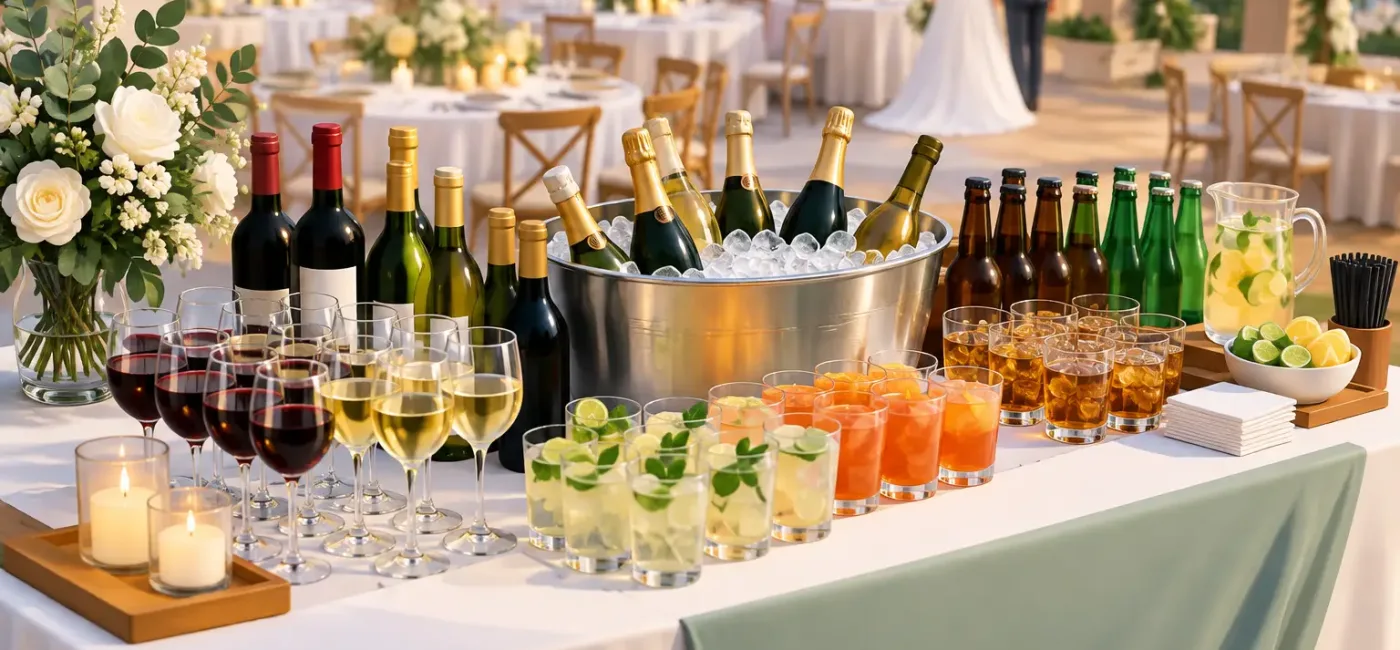
A wedding bar is one of the first places guests gather and one of the last things they remember. Get alcohol for wedding reception planning right, and the drinks feel generous without leaving you with stacks of unopened bottles or a budget that disappears before dessert.
The right order is not about buying every possible spirit. It is about matching the bar to your guest count, reception length, food, venue rules, and crowd. A polished Champagne toast, cold beer, reliable wine, and a few well-chosen spirits usually do more for the room than an oversized back bar with no clear plan.
Start With Guest Count and Reception Length
For a standard four-hour wedding reception, plan for an average of four to five drinks per drinking guest. That number includes the arrival drink, toast, dinner pours, and post-dinner rounds. A daytime lunch reception may sit closer to three drinks per guest. A five-hour evening party with a dance floor can move toward six, particularly if the bar remains open after dinner.
Not every invited guest will drink. For a rough planning estimate, use 70 to 80 percent of the adult guest list as drinkers, then adjust based on your families and friends. A reception of 150 adults with an estimated 75 percent drinking participation gives you around 113 drinking guests. At four drinks each, that is roughly 450 servings.
This is a planning baseline, not a rule. A wine-focused family dinner, a cocktail-heavy city celebration, and a casual beer garden wedding will need different mixes. The season matters too. Cold lager, sparkling wine, and light white wine move faster in warm weather, while whisky, red wine, and richer pours tend to get more attention at evening receptions.
Build a Wedding Bar Guests Will Actually Use
A balanced alcohol for wedding reception order usually puts beer and wine at the center, adds sparkling wine for the toast, and keeps spirits focused. Guests recognize familiar labels and appreciate a bar that is easy to order from. This also keeps service faster during the busiest moments.
For most receptions, use this split of total alcoholic servings as a starting point:
- Beer and cider: 30 to 35 percent
- Wine: 35 to 40 percent
- Sparkling wine or Champagne: 10 to 15 percent
- Spirits and cocktails: 15 to 25 percent
The toast can be counted separately if every guest receives a glass. One 750 ml bottle of Champagne or sparkling wine pours about six standard toast flutes. For 120 guests, buy 20 bottles, then add a few extra if the same sparkling wine will be served during cocktail hour. A quality Prosecco or sparkling wine is often the smarter volume choice, while a few bottles of Moët & Chandon can be reserved for the wedding party or head table if premium presentation matters.
For dinner wine, one 750 ml bottle provides about five standard servings. A common starting point is one bottle for every two guests when wine is the main table drink, but this can be lower if beer and spirits are widely available. Keep the mix simple: one approachable red, one crisp white, and perhaps a rosé for a warm outdoor event. Choose familiar, food-friendly bottles rather than overly niche styles that leave guests guessing.
Beer works best when there is enough choice without turning the bar into a warehouse. A light lager is the dependable essential. Add a fuller-flavored beer, stout, or cider if it fits your guests. Guinness can be a strong addition for fans, but it should supplement rather than replace easy-drinking options at a large mixed crowd.
Keep Spirits Focused, Not Endless
A full open bar does not require every bottle category. Stocking vodka, gin, whisky, tequila, and rum covers most classic requests, especially when paired with a concise mixer list. If your venue provides bartenders, confirm what they can make efficiently and whether garnishes, ice, glassware, and mixers are included.
For a reception with a moderate cocktail demand, a practical spirit lineup is vodka for highballs, gin for gin and tonics, whisky for neat pours or whisky sodas, tequila for Palomas or simple shots, and rum for rum and cola. A 750 ml bottle produces roughly 16 standard 1.5-ounce pours. Premium bottles can sit alongside dependable value options: use recognizable brands for speed and consistency, then add one celebratory choice such as a single malt Scotch, Japanese whisky, or luxury tequila for guests who will appreciate it.
The trade-off is clear. A broad spirit range looks impressive, but it raises cost, slows service, and leaves more partial bottles. Two signature cocktails can create more personality than 10 complicated drink requests. Choose recipes that use overlapping ingredients. For example, a gin elderflower highball and a whisky ginger both need simple mixers and fast builds, while a complex espresso cocktail station demands more labor and equipment.
Turn Quantities Into a Real Order
Once you know the number of projected servings, assign the percentages to each category. For a 450-serving reception, a balanced order might include 150 beer or cider servings, 170 wine servings, 55 sparkling servings, and 75 spirit or cocktail servings. That roughly translates to seven cases of 24 beers or ciders, 34 bottles of still wine, 10 bottles of sparkling wine, and five 750 ml bottles of spirits.
That example assumes the toast is included in the sparkling count and the crowd is evenly mixed. If every guest receives a toast, build that quantity first, then calculate the remaining bar servings. If you know your guests are enthusiastic wine drinkers, shift more of the beer allocation into red and white. If the couple has a strong cocktail crowd, increase spirits and make sure the venue has enough ice and bar staff.
Buy a small buffer, generally 5 to 10 percent above your estimate. It protects you from unexpected plus-ones, warm weather, and the moment when the dance floor suddenly fills after dinner. Avoid buying a 25 percent buffer unless your venue allows unopened bottles to be returned or you are happy to keep the extras for future celebrations.
Do Not Forget the Non-Alcoholic Bar
A thoughtful reception does not treat non-drinkers as an afterthought. Offer chilled still and sparkling water, soft drinks, juices, and at least one adult-feeling zero-proof option. Non-alcoholic sparkling wine is especially useful when guests want to join the toast without alcohol.
Plan plenty of water. A simple target is one to two bottles or servings of water per person, more for outdoor venues. Good non-alcoholic choices also help pace alcohol consumption and make the bar more welcoming for drivers, pregnant guests, younger adults, and anyone choosing not to drink.
Control Costs Without Making the Bar Feel Cheap
The biggest savings usually come from simplifying, not from choosing the lowest-priced bottle in every category. Serve Champagne only for the toast, choose solid house wine for dinner, and reserve prestige bottles for a small display or the wedding party. Buy beer by the case and wine by the multiple when quantity pricing is available.
Check the venue contract before placing an order. Corkage, compulsory in-house bar packages, delivery windows, storage access, and chilled storage can change the math quickly. Ask who supplies ice, mixers, glassware, refrigeration, and staff. A low bottle price is not a bargain if you later need to source 40 bags of ice and last-minute tonic water separately.
For Singapore weddings, plan delivery well ahead of the venue access time and confirm that someone can receive the order. Jarbarlar can be a practical one-stop option for cases of beer, dinner wine, Champagne, spirits, and non-alcoholic bottles, particularly when you need volume choices without running between stores.
Make the Last Decision Easy
The best wedding bar is not the most elaborate one. It is the one that stays cold, pours quickly, suits the couple, and has enough variety for guests to feel considered. Choose the bottles you genuinely want to see opened, leave room for water and zero-proof drinks, and let the celebration do the rest.