





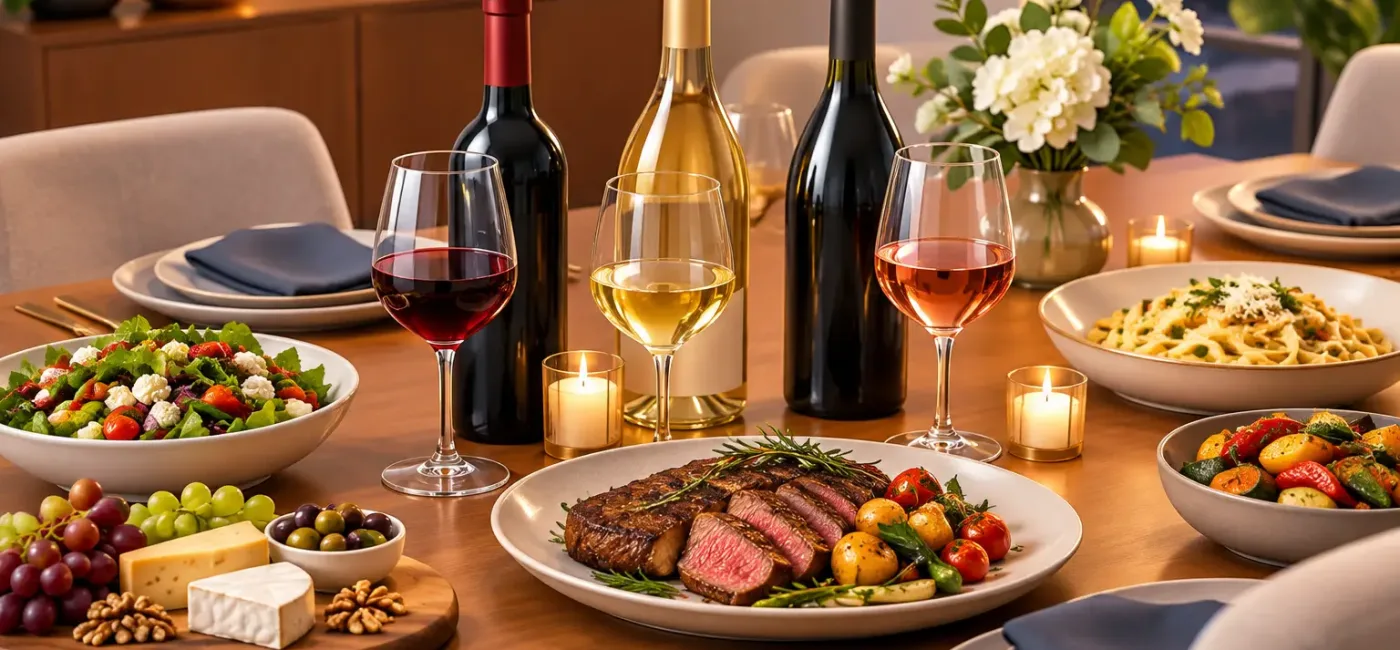
The best wine for dinner party hosting is rarely one expensive bottle that has to please everyone. It is a small, smart lineup: one refreshing option for arrival, one flexible white, one crowd-friendly red, and enough quantity that nobody is watching the last pour. Match the bottles to the food, the weather, and how formal the night feels, then buy with a little buffer.
A wine that works brilliantly with spicy grilled chicken may feel flat beside rich beef. A bold Cabernet can impress at a steak dinner but overpower delicate fish. The good news is that most hosts do not need a cellar or a sommelier-level plan. A few reliable styles cover almost every dinner table.
Start With the Menu, Not the Label
Food should make the first decision. Think about the heaviest or most strongly seasoned dish on the table, rather than every individual ingredient. If the main course is creamy pasta, roast chicken, salmon, or a mix of dishes, choose wines with enough freshness to cut through richness. If you are serving steak, lamb, burgers, or slow-cooked beef, move toward fuller reds.
For a menu built around Asian flavors, avoid assuming that only red wine will work. Chili, ginger, garlic, soy, herbs, and sweet glazes can make high-tannin reds taste harsher. Chilled aromatic whites, sparkling wine, lighter reds, and off-dry styles often perform better. With Singapore-style entertaining, this matters especially for dishes such as chili crab, satay, curry, roasted meats, and shared takeout spreads.
Also consider sauce before protein. Grilled salmon with lemon and herbs suits a crisp Sauvignon Blanc. Salmon with a sweet soy glaze can be better with Riesling or Pinot Noir. Chicken in a creamy mushroom sauce can handle Chardonnay, while chicken in a tomato-based sauce may be happier beside Sangiovese or a lighter Italian red.
Best Wine for Dinner Party Guests: Build a Four-Bottle Mix
For a group with mixed preferences, a practical wine selection has four roles. You do not have to open every bottle at once, but having them ready makes the evening easier.
- Sparkling wine for guests arriving, salty snacks, fried appetizers, and a toast.
- Crisp white wine for seafood, salads, lighter starters, and spicy dishes.
- Rounded white wine for roast chicken, creamy pasta, mushrooms, and richer fish.
- Versatile red wine for charcuterie, pizza, grilled meats, tomato sauces, and guests who simply prefer red.
Sparkling wine is the easiest opener because bubbles are refreshing, festive, and food-friendly. Prosecco is a relaxed choice for casual hosting, while Champagne suits a milestone dinner or a more polished table. A dry sparkling rosé gives you the same celebratory feel with a little more fruit and color.
For the crisp white, Sauvignon Blanc is a dependable buy. It is bright, citrusy, and especially good with seafood, herbs, goat cheese, and fresh starters. Pinot Grigio is lighter and softer, making it a simple option for guests who want an easy-drinking white without much intensity. Dry Riesling is one of the strongest choices for spicy food, though it is worth checking the label if you want a fully dry bottle.
For the richer white, Chardonnay is the natural move. An unoaked Chardonnay stays fresher and works well with seafood and roast chicken. An oaked, fuller Chardonnay brings more texture for creamy sauces, lobster, buttered vegetables, and richer poultry dishes. If the menu is varied, choose a balanced Chardonnay rather than the heaviest style available.
For red, Pinot Noir is the most useful all-rounder. It has enough fruit for many red-wine drinkers but usually less tannin than Cabernet Sauvignon, so it is easier with chicken, salmon, duck, mushrooms, and a broad shared menu. If steak or lamb is the centerpiece, add a Cabernet Sauvignon, Malbec, or Syrah. These wines bring more body and structure, but they are best when the food can stand up to them.
Choose by Dinner Style
A casual pizza, pasta, and sharing-plates dinner needs a different plan than a formal roast. For Italian-style food with tomato sauces, choose Sangiovese, Chianti, Barbera, or a medium-bodied Pinot Noir. Their acidity keeps pace with tomato, cheese, and cured meats. For creamy pasta or truffle dishes, Chardonnay and Pinot Noir are safer than very tannic reds.
For a steak dinner, Cabernet Sauvignon is the familiar choice for a reason. Its firm structure works with fat, char, and a peppery crust. Malbec gives a plush, fruit-forward alternative that many guests find immediately approachable. Syrah is excellent with lamb, grilled meats, and smoky barbecue, but its peppery character may not suit every palate.
For seafood, keep the wine fresh unless the preparation is rich. Sauvignon Blanc, Albariño, Pinot Grigio, and dry sparkling wine are strong choices for grilled fish, prawns, oysters, and citrus-forward dishes. With buttery lobster, scallops, or baked fish in a cream sauce, pour Chardonnay instead.
For spicy food, prioritize refreshment over power. Riesling, Gewürztraminer, Moscato d’Asti, sparkling wine, and lighter chilled reds can cool the heat and handle a touch of sweetness in sauces. Big, dry Cabernet and very high-alcohol reds can make spice feel hotter. If your menu includes several spicy dishes, put a good white in the center of the plan and treat red as an optional second choice.
How Much Wine to Buy
A standard 750 ml bottle provides about five regular pours. For a seated dinner where wine is the main drink, plan on half a bottle per wine-drinking guest. That means six bottles for 10 guests is usually a comfortable starting point, especially if you also have sparkling wine, beer, spirits, and non-alcoholic drinks available.
For a longer event, a celebration, or a crowd that enjoys wine, increase that allowance. It is better to have an unopened bottle left over than to run dry midway through dessert. Larger formats can be useful for big groups: they look generous on the table, reduce the number of bottles to open, and often make sense when quantity pricing is available.
Do not split the order evenly between red and white by habit. For a warm-weather gathering, seafood menu, or spicy spread, white and sparkling may outsell red two to one. For a steakhouse-style dinner, reverse that balance. Ask yourself what you are serving and who is actually coming, not what a traditional dinner party is supposed to look like.
Serve It at the Right Temperature
Serving temperature can improve an ordinary bottle more than a small price upgrade. Chill sparkling wine well, ideally around 40 to 45°F. Crisp whites should be cold but not icy, around 45 to 50°F. Fuller whites can sit a little warmer, around 50 to 55°F, so their texture and flavor show properly.
Most reds are served too warm in homes. “Room temperature” was never meant to mean a warm apartment. Light reds such as Pinot Noir benefit from 20 to 30 minutes in the refrigerator before serving. Cabernet, Malbec, and Syrah should be closer to 60 to 65°F than 75°F. If a red feels hot, flat, or overly alcoholic, cool it slightly.
Open sparkling and white wine just before guests arrive. Open fuller reds 30 to 60 minutes before dinner, especially if they are young and tightly structured. You do not need elaborate equipment for every bottle, but a simple decanter can help a bold red soften and open up.
Spend Where Guests Will Notice
A dinner party does not require every bottle to be premium. Spend more on the wine that matches the main course or the bottle you will pour for a toast. Keep the arrival bottle and backup options in a sensible, crowd-pleasing price range. This creates a better experience than buying one prestige label and several random bottles that do not fit the menu.
Recognizable regions and grapes also make ordering faster. A New Zealand Sauvignon Blanc, Italian Prosecco, Argentine Malbec, California Cabernet, French Pinot Noir, or Australian Shiraz gives guests a clear style signal without turning dinner into a tasting seminar. For hosts shopping for a group, Jarbarlar’s broad wine range and multi-bottle options can make it easier to build that mix in one order.
Include a non-alcoholic option that feels intentional, not like an afterthought. Non-alcoholic sparkling wine, chilled soda water with citrus, or a good zero-proof aperitif gives every guest something celebratory in hand. A thoughtful host plans for different tastes, designated drivers, and guests who are simply drinking less.
The bottle that makes the night is not always the rarest one. Choose wine that fits the food, buy enough for a second pour, chill it properly, and keep one versatile backup ready. Then get back to the table – that is where a dinner party earns its best memories.